

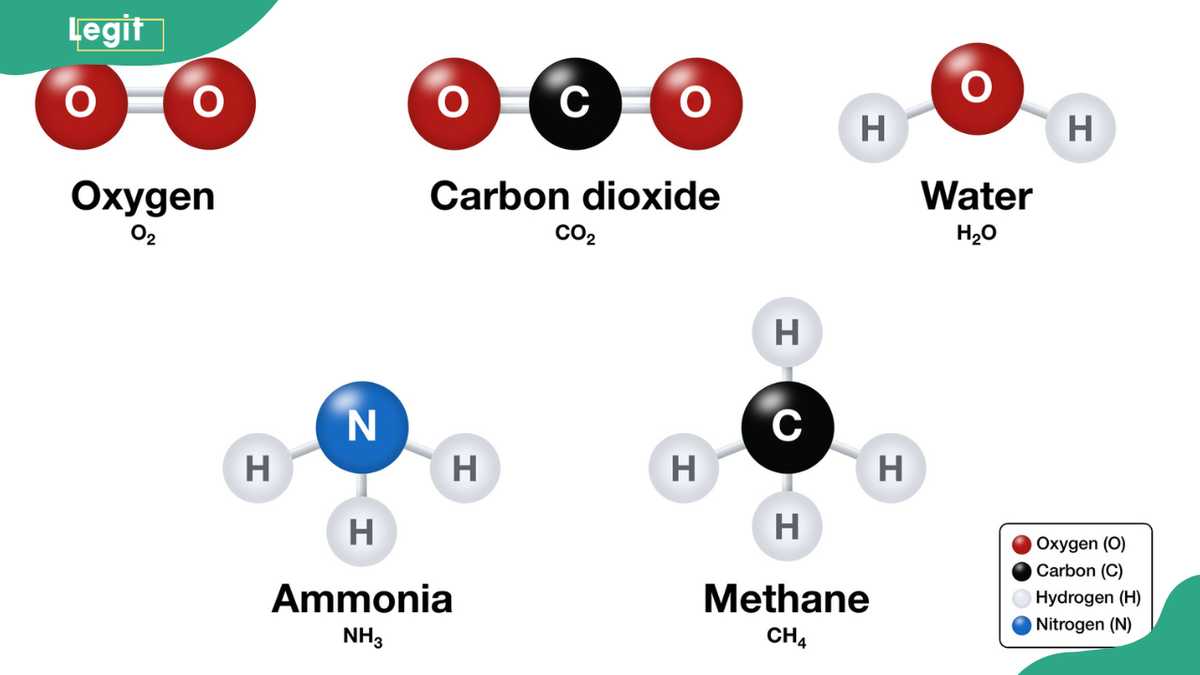

Choosing the right JAMB subject combination for biochemistry courses is the first step towards securing admission in Nigeria. This article covers the correct UTME subjects, O-Level requirements, direct entry routes, top universities offering the programme, and answers to the most common reader questions.Illustration of chemistry and physics: molecular models of various substances, chemical formulas, molecular structures. Photo: Salinee Saensuk (modified by author) Source: UGCTABLE OF CONTENTSKey takeawaysJAMB subject combination for biochemistry coursesWhy these four subjects?O’Level requirements for biochemistryDirect entry requirements for biochemistryHow to apply via direct entryHow many years does it take to study biochemistry in Nigeria?Best universities for biochemistry in NigeriaIs biochemistry a professional course in Nigeria?Can I switch from biochemistry to medicine or nursing in Nigeria?Switching to medicineSwitching to nursingFAQsWhat is the JAMB subject combination for biochemistry in Nigeria?Which school is best for biochemistry in Nigeria?How many years does it take to study biochemistry in Nigeria?Can I combine WAEC and NECO results for biochemistry admission?What careers can I pursue with a biochemistry degree in Nigeria?Key takeawaysThe JAMB UTME subjects for biochemistry are Use of English, Biology, Chemistry, and Physics, and all four are compulsory.Candidates must have five O-Level credits — including English, Maths, Biology, Chemistry, and Physics — obtained in at most two sittings.Direct entry applicants can gain 200-Level admission via A-Levels, ND, or NCE in a relevant science discipline.The University of Ibadan ranks first in Nigeria for biochemistry and 14th in Africa.Biochemistry is not classified as a professional course in Nigeria the way Medicine is, but it remains a strong foundation for postgraduate study and research careers.JAMB subject combination for biochemistry coursesUTME candidates applying for biochemistry must register and sit for Use of English, Biology, Chemistry, and Physics — all four subjects are mandatory for biochemistry in Nigerian universities.Mathematics is needed in WAEC but not in JAMB, while Physics is needed in both — a distinction that confuses many students.Why these four subjects?Biology and Chemistry are the core science subjects for biochemistry, while Physics or Mathematics serves as a supporting subject. Most institutions, however, standardise on Physics rather than Mathematics for UTME purposes.Always verify your combination on the official JAMB portal before completing your registration, as individual universities occasionally state slight variations in their brochure entries.Lab research, examining a sample under a microscope in a laboratory.
Photo: Moussa81 Source: Getty ImagesO’Level requirements for biochemistryCandidates must obtain five credit passes in English Language, Mathematics, Biology, Chemistry, and Physics in not more than two sittings in WAEC, NECO, or an equivalent examination.Credit-level passes must be in at least five subjects in not more than two sittings, including English Language, Mathematics, Chemistry, Biology, and Physics in SSCE/NECO or their equivalent.Some schools, such as Obafemi Awolowo University, also accept Agricultural Science in place of Biology—always check your target institution’s brochure.Direct entry requirements for biochemistryFor the B.Sc. degree in biochemistry, courses last three years for direct-entry students and four years for those admitted through the entrance examination.Direct-entry candidates may be considered for 200-level admission if they have an ND or HND in biochemistry, Science Laboratory Technology, or a related science programme (subject to institutional approval) and meet the standard O-Level requirements.Direct entry candidates are also required to have obtained the General Certificate of Education at Advanced Level, or the Higher School Certificate at Principal Level, in Chemistry and Biology — or Plant Science and Biotechnology, or Zoology and Environmental Biology — plus credits in either Mathematics or Physics.Additionally, candidates with good passes in Biology and Chemistry at NCE level and upper credit at ND from recognised polytechnics shall be admitted into a three-year direct entry programme.A scientist conducts an experiment with test tubes and a Petri dish in a laboratory. Photo: Nadzeya Haroshka Source: Getty ImagesHow to apply via direct entryPurchase the JAMB Direct Entry form from the JAMB portal.Select biochemistry as your preferred course and choose an accredited university.Upload your A-Level, NCE, or ND certificate alongside your O-Level results.Await the institution’s Post-UTME or direct entry screening date.How many years does it take to study biochemistry in Nigeria?The B.Sc. biochemistry degree is a rigorous four-year undergraduate programme that explores the molecular foundations of life. Direct entry students complete the same qualification in three years by entering at 200 Level.The curriculum aligns with the Core Curriculum and Minimum Academic Standards (NUC-CCMAS) for undergraduate biochemistry education in Nigeria.Best universities for biochemistry in NigeriaThe best cities to study biochemistry in Nigeria based on the number of universities and their ranks are Ibadan, Nsukka, Ife, and Zaria. The table below summarises the top institutions by research ranking and estimated annual fees.UniversityTypeEduRank (Nigeria)Estimated Annual Fees (₦)University of Ibadan (UI)Federal#130,000 – 135,000University of Nigeria, Nsukka (UNN)Federal#240,000 – 90,000Obafemi Awolowo University (OAU)Federal#335,000 – 145,000Ahmadu Bello University (ABU)Federal#425,000 – 80,000Federal University of Technology, Akure (FUTA)Federal#525,000 – 100,000University of Lagos (UNILAG)Federal#695,000 – 110,000University of Ilorin (UNILORIN)Federal#830,000 – 150,000Fee ranges sourced from Edubase.ng and are estimates — always confirm directly with the institution.The University of Ibadan ranks first in Nigeria for biochemistry, 14th in Africa, and 933rd worldwide for the subject, with an acceptance rate of 11%.For the 2026/2027 admission cycle, UI set a uniform aggregate cut-off mark of 51.25 for biochemistry across the merit, catchment area, and Educationally Less Developed States categories.
UI’s general JAMB cut-off is 200 for 2026, though Basic Medical Sciences courses—which include biochemistry—require scores of 220 and above.Obafemi Awolowo University ranks third in Nigeria for biochemistry and 33rd in Africa, with a 7% acceptance rate and about 32,480 students enrolled.Is biochemistry a professional course in Nigeria?Biochemistry does not have the same straightforward professional pathway as courses such as Medicine, Nursing, or Medical Laboratory Science.In Nigerian universities, biochemistry is generally offered as a B.Sc. degree, and the National Universities Commission includes it among the science programmes covered under its Core Curriculum and Minimum Academic Standards.Teacher supporting a student with special needs during class in the lab. Photo: FG Trade Source: Getty ImagesBiochemistry is a good course in Nigeria, offering diverse career opportunities across healthcare, pharmaceuticals, food, academia, and research — common roles include laboratory scientist, toxicologist, quality control analyst, and research assistant.It provides a strong foundation, especially for those aiming for careers in research, pharmaceuticals, or as a stepping stone to professional degrees like Medicine—though the direct job market for B.Sc. graduates is competitive and often requires postgraduate degrees or professional certifications to secure high-paying roles.Can I switch from biochemistry to medicine or nursing in Nigeria?Switching to medicineYou can change from biochemistry to medicine and surgery within or across universities through direct entry or course transf