

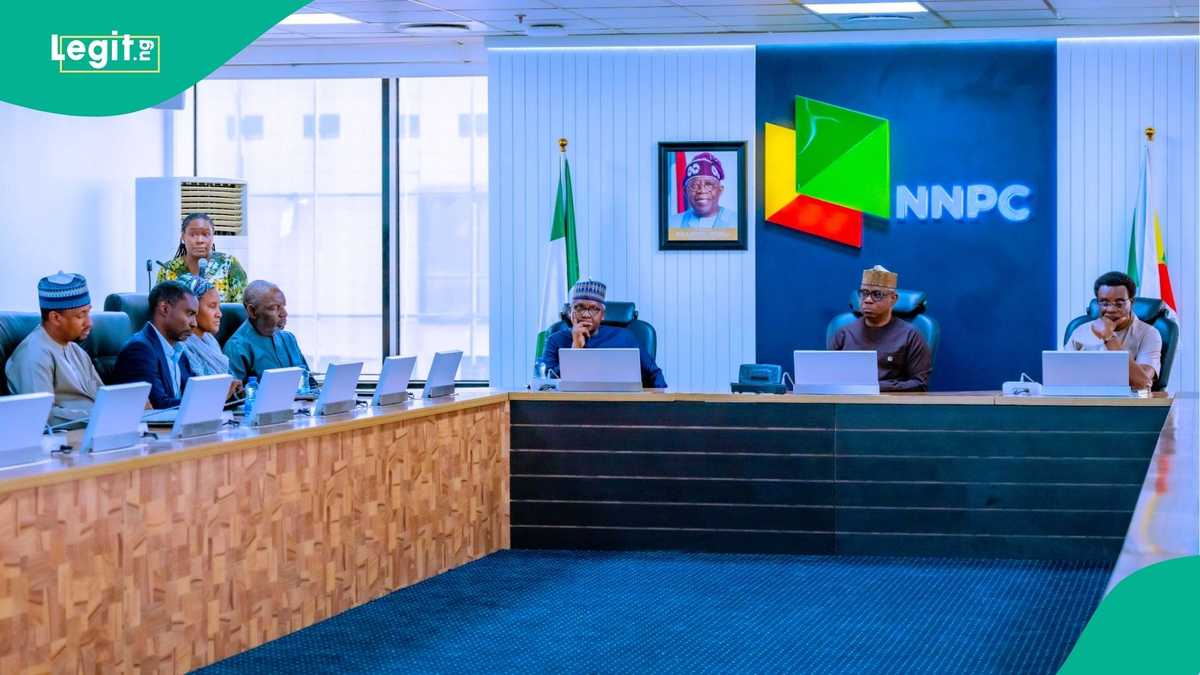

NNPC rejected claims that gas supply problems caused the recent drop in electricity generation across NigeriaThe company said gas production rose by about 10% in 2026, contradicting NISO’s explanation for falling power outputNNPC called for a joint review involving gas suppliers, pipeline operators, power generators and NISO to identify the actual causePAY ATTENTION: Mark Legit.ng as a preferred source, and our content will appear higher in your Google feed!Legit.ng journalist Dave Ibemere has over a decade of experience in business journalism, with in-depth knowledge of the Nigerian economy, stocks, and general market trends.The Nigerian National Petroleum Company Limited (NNPC) has pushed back against suggestions that gas supply problems are behind the recent fall in electricity generation, saying its pipeline network has no constraints preventing gas from reaching power plants.The company’s subsidiary, NNPC Gas Infrastructure Company Limited (NGIC), issued the clarification in a statement dated Friday, November 6, signed by Chief Corporate Communications Officer Andy Odeh.NNPC says its gas pipeline network has no restrictions preventing supplies from reaching power plants. Photo: NNPC Source: TwitterThe denial came a day after the Nigerian Independent System Operator (NISO) attributed declining power output to limited gas availability and reduced water levels at hydroelectric facilities, a position NNPC rejected.PAY ATTENTION: From breaking news to viral moments. Follow Legit.ng on Instagram!NNPC counters NISO’s explanationNNPC said its operational records showed that its gas transportation infrastructure remained fully available to deliver gas to power stations without restrictions.The company also pointed to an approximately 10% increase in Nigeria’s gas production volumes in 2026, which it attributed to the Federal Government’s efforts to develop and commercialise the country’s gas reserves.However, NNPC distinguished between pipeline availability and other stages of the gas-to-power supply chain.It noted that commercial supply agreements, actual volumes delivered to individual generating stations, equipment readiness, scheduled maintenance and the quantity of gas physically taken up by power plants were separate issues requiring investigation.The company said:”Our focus remains on dependable energy infrastructure and constructive collaboration that helps translate Nigeria’s gas resources into more reliable electricity for Nigerians.”NNPC called for a coordinated review involving gas suppliers, pipeline operators, electricity generators and NISO to establish where the actual constraints exist.Nigeria’s electricity supply challengesNigeria’s electricity grid relies heavily on gas-fired power stations, meaning disruptions across the production, transportation or delivery chain can quickly reduce electricity generation and affect homes and businesses.NNPC insists that gas supply constraints cannot be blamed on its pipeline infrastructure. Photo: NNPC Source: TwitterHydroelectric output can also fluctuate with seasonal changes in water levels, adding to the country’s electricity supply challenges.NNPC said it was ready to participate in a joint assessment, stressing that accurate data from every stage of the energy value chain was necessary before conclusions could be drawn about the source of the current difficulties.As of the time of the statement, NISO had not responded to NNPC’s clarification, while the precise causes of the recent decline in electricity generation affecting the five states remained unresolved.LPG prices increase Earlier, Legit.ng reported that Nigeria’s cooking gas market took a heavy hit between March and June 2026 as the Iran conflict disrupted global liquefied petroleum gas (LPG) supplies, pushing demand down by nearly 23% to 123,000 tonnes in June, the lowest level recorded in seven months, according to energy intelligence firm Argus.Argus, citing data from Nigeria’s Midstream and Downstream Petroleum Regulatory Authority, said the drop was driven by a combination of weaker domestic output and tighter import conditions at a time when global LPG markets were already under stress from the conflict.
Source: Legit.ng Dave Ibemere (Senior Business Editor) Dave Ibemere is a senior business editor at Legit.ng. He is a financial journalist with over a decade of experience in print and online media. He also holds a Master’s degree from the University of Lagos. Fellow, MTN Pan African Media Innovation(2026), Member of the Nigerian Institute of Public Relations and other media think tank groups.
He previously worked with The Guardian, BusinessDay, and headed the business desk at Ripples Nigeria. Email: dave.ibemere@corp.legit.ng. Nigerian National Petroleum Corporation (NNPC)Federal Government Of Nigeria Beautiful quotes Us embassy Funny text messages Dstv Nigerian agricultural quarantine service