

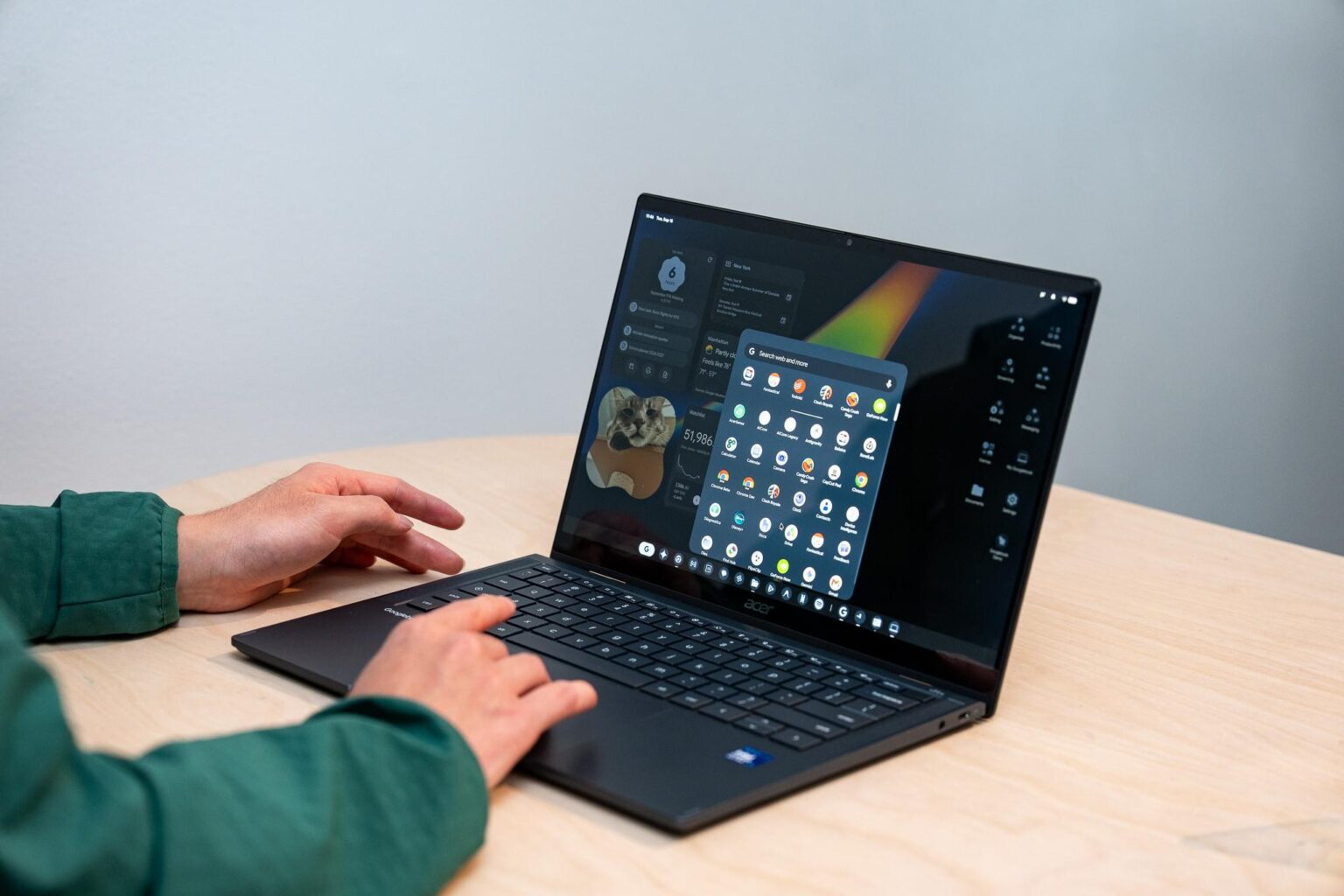

TechGadgetsNewsI got to see Google’s wild ideas about the future of laptopsGooglebooks are here. And they’re actually interesting (for Android phone users) — but there are still so many questions.by Antonio G. Di BenedettoSep 21, 2026, 1:00 PM UTCShareGiftGooglebooks look like fancy Chromebooks at first, but there are interesting software ideas. | Photo: Antonio G. Di Benedetto / The VergeTechGadgetsNewsI got to see Google’s wild ideas about the future of laptopsGooglebooks are here.
And they’re actually interesting (for Android phone users) — but there are still so many questions.by Antonio G. Di BenedettoSep 21, 2026, 1:00 PM UTCShareGiftAntonio G. Di Benedetto is a reviewer covering laptops and the occasional gadget. He spent over 15 years in the photography industry before joining The Verge as a deals writer in 2021.There are a few things about using a Googlebook that immediately feel just right.
The hardware is polished (since it’s based on current laptops). The OS is familiar (if you’ve ever used a Chromebook). But most impressive, it integrates your Android phone with your PC so they feel more like one device. It’s the culmination of a series of new ideas that blur the two devices together.
After my first look, I went from doubtful to excited by the prospect of Google pulling it all off.After an initial barebones announcement in May, Google is finally launching Googlebooks — its new line of Android-based laptops. The initial five Googlebook models from Dell, Lenovo, HP, Acer, and Asus all launch October 4th, with preorders available now and starting prices ranging from $899 to $1,299.So what are Googlebooks?In a nutshell, they’re laptops running a new operating system that’s a blend of Chromebooks and Android — with a whole lot of Gemini AI stuff built in. They look quite like Chromebooks, but with Android’s Material Three Expressive UI stylings on the software side and higher-end materials for hardware. There doesn’t seem to be a baseline spec for Googlebooks, but at launch they’re all thin-and-light laptops ranging from 13 inches to 15 inches with 16GB of RAM or more, touchscreen displays (most of them OLED), metal chassis, backlit keyboards, either fingerprint or facial recognition unlocking (or both), and a Google-y Glowbar light strip on their lids.The launch lineup for Googlebooks.
Image: GooglePowering the initial lineup of Googlebooks are Intel Core Ultra Series 3 “Panther Lake” and Qualcomm Snapdragon X Elite chips, with MediaTek options expected to come later. While the first wave of Googlebooks are similarly sized and all have “Googlebook” in their name, there are some variations: haptic or mechanical trackpads, port offerings, even a 2-in-1 convertible. Check out our roundup of all the hardware here.RelatedThese are the first five Googlebook laptopsThe long dream of the GooglebookI spent a bit of time prodding all the Googlebooks during my demos, and each one felt pretty nice. They each have their own unique qualities: the Asus was incredibly lightweight, the Lenovo has plenty of ports and an optional mouse with a matching Glowbar light, the Acer’s convertible form factor allows some tablet-like use (and it’s pretty affordable for a Panther Lake laptop).
The HP had a great looking screen and a latticeless keyboard I surprisingly didn’t hate, and the Dell is basically a gold XPS 13 (which is excellent) but with a different chip.PreviousNext1/5The Asus Googlebook 14.But everything really special about Googlebooks comes down to software. They run Googlebook OS, which is built with the native Android stack atop a Linux kernel and supports both x86 and Arm architectures (as implied by the chip offerings). It’s an Android desktop interface that runs Android apps and feels much like ChromeOS, but it’s got some handy features when paired with an Android phone.You can cast apps from an Android phone directly to a Googlebook, even without touching your phone. Googlebooks essentially have two app drawers: a G-logo start menu for installed Googlebook apps and a second one beside it that pulls up mobile apps from your phone.
Click a phone app and you can fully use that app with the mouse and keyboard or the Googlebook’s touchscreen. It’s a bit like iPhone Mirroring on macOS, but the apps are individually extracted to the desktop OS instead of showing your whole phone interface.PreviousNext1/2You can cast any app from your phone via a second app drawer on Googlebook OS. Here you see both drawers open.Googlebooks also have a nifty feature called Continue On where the icons of apps you’re currently using on your phone appear in the bottom bar — allowing you to click it on the laptop and hand it off to the Googlebook. These app handoffs can transition to a native app or a web app, depending on how developers have programmed it.
A Google rep informed me at my in-person briefing that Continue On is fairly simple for Android developers to add to their apps, and casting apps to a Googlebook doesn’t require anything extra.The other big way Googlebooks interact with an Android phone is Quick Access, allowing you to see and access all the files stored on your phone right in the desktop Files app. The paired Android phone is listed in the sidebar of a Googlebook’s Files window, just like any other drive or home folder, and you can directly search it and share files from it without physically picking up your phone. This is pretty handy stuff, but of course it all requires you running an Android phone. If you have an iPhone then you’re limited to a Link to iOS app that just does some message syncing and replying.PreviousNext1/2Quick Access treats your paired phone like another local drive.
Image: GoogleAs Google first showed back in May, the Googlebook mouse cursor is called a Magic Pointer — allowing you to wiggle it to summon Gemini. Doing so allows you to ask Gemini questions or have it look at things on your screen to get further info. One of Google’s live demos was asking Gemini “Is this legit?” on a Spotify account authentication email, or adding a multi-week exercise routine for marathon training to a Google Calendar. Some tasks run locally, while many will go up to Gemini in the cloud — and it wasn’t clear when that was happening during any of Google’s demos.
Googlebooks also have recent Android features like Create My Widget (for creating custom widgets from natural language prompts) and Rambler (speech transcription that can parse stream of consciousness-like wordiness).And while thin-and-light laptops aren’t really built for gaming, since Googlebooks run Android they work with 20,000 games at launch. Many of these are free-to-play mobile games with microtransactions, of course, but the Play Store does have many indie titles that should play fine on a laptop. I briefly demoed a Googlebook running Dead Cells and Balatro — indie staples that are well worth playing on any platform. But it was also jarring to see a demo of Asphalt Legends offer me the option to watch a post-race ad for an in-game currency reward.
That felt icky and weird on a laptop. But when it comes to mainline gaming, Nvidia’s GeForce Now service is also coming to Googlebooks, and the first year is free with one of Google’s new laptops.Love me some Dead Cells.Seeing ads after a race in a mobile game? Don’t love that.A big draw of Googlebooks is that by being Android-based they can follow software developments that move at a much quicker pace than ChromeOS. Chromebooks will continue on, especially for education use where they’re widely adopted, but it’s pretty easy to feel like their days are numbered as the focus shifts to Googlebooks.
Just like Chromebooks, Google is promising Googlebooks will get 10 years of OS support.I kept asking who Googlebooks are for during Google’s media briefing, and Android president Sameer Samat told me they’re aimed at users who own a phone like a Sam