

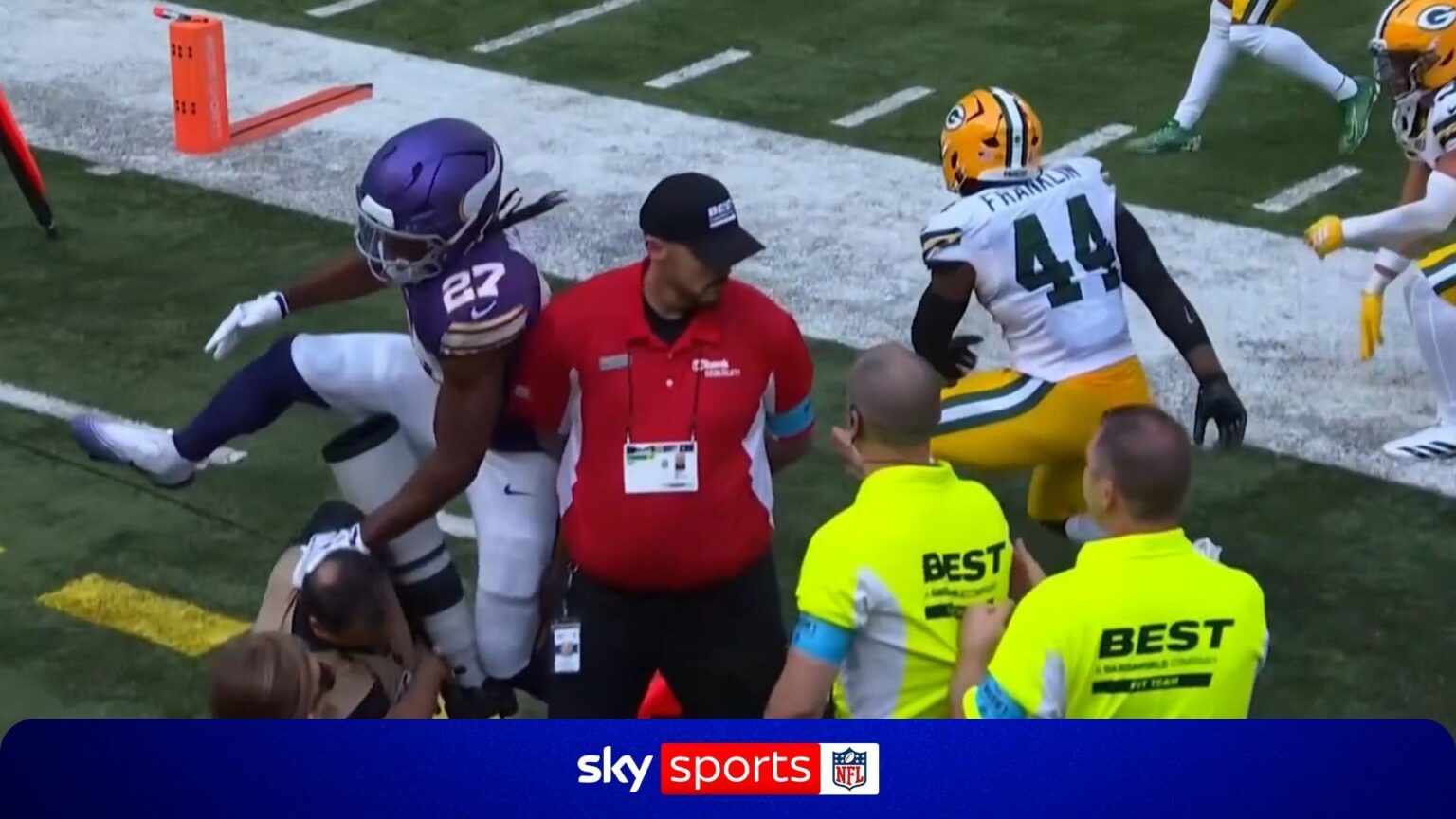

In the opening minutes of a fiery NFC North clash between the Green Bay Packers and the Minnesota Vikings, a dramatic sideline incident briefly stole the spotlight from the action on the field. During a fast-paced drive in the first quarter, a television cameraman was violently wiped out when momentum carried a play out of bounds and directly into the media area. The collision halted the immediate surrounding play as players, officials, and sideline personnel rushed over to check on the downed crew member. It served as a stark, sudden reminder of the physical hazards that exist just inches beyond the field of play in modern professional football.
The collision occurred as a high-speed play swept toward the boundary lines, leaving the camera operator with virtually no time to dodge the oncoming momentum. Carrying heavy broadcasting equipment on his shoulder, the crew member bore the full brunt of the impact as pads and turf collided off the field. Medical staff stationed nearby immediately attended to the scene, administering preliminary checks to evaluate the extent of any injuries. Players from both the Packers and the Vikings demonstrated immediate sportsmanship, clearing space and signaling for trainer assistance while offering supportive pats on the shoulder once the operator managed to sit up.
Operating a sideline camera during an NFL game is widely recognized as one of the most perilous jobs in sports media production. Operators must remain hyper-focused through their viewfinders to capture tight, high-definition footage, which often blinds them to peripheral threats charging down the field at elite speeds. With modern players frequently weighing upwards of 250 pounds and running at nearly twenty miles per hour, collisions along the crowded perimeter are an ever-present danger. Over the years, league officials and broadcast networks have attempted to implement buffer zones, yet the chaotic nature of live football makes complete elimination of such accidents virtually impossible.
The high-stakes nature of the Green Bay and Minnesota rivalry only heightened the intensity of the environment inside the stadium. Known as one of the most hostile and energetic atmospheres in the league, games between these two historic franchises are routinely fought with relentless physicality from the very first whistle. Every sideline play involves maximum effort as ball-carriers fight for extra yards, frequently leading to forceful exits beyond the blue paint. While fans in the stands and millions watching at home consume the thrilling spectacle, the incident highlighted the physical toll exacted not just on the athletes, but on everyone working within arm’s reach of the gridiron.
Following a brief pause to ensure the cameraman was safe and capable of moving, the stadium broadcast resumed, and play restarted without further interruption. Despite taking a punishing hit, the resilient operator was able to walk off under his own power to undergo further evaluation, drawing warm applause from the crowd in Minneapolis. Incidents like this underscore the remarkable dedication of technical crews who routinely risk personal injury to deliver intimate, immersive coverage to viewers worldwide. As the Packers and Vikings battled through the remainder of the contest, the moment remained a sobering testament to the chaos that forever hovers on the edge of the field.


