

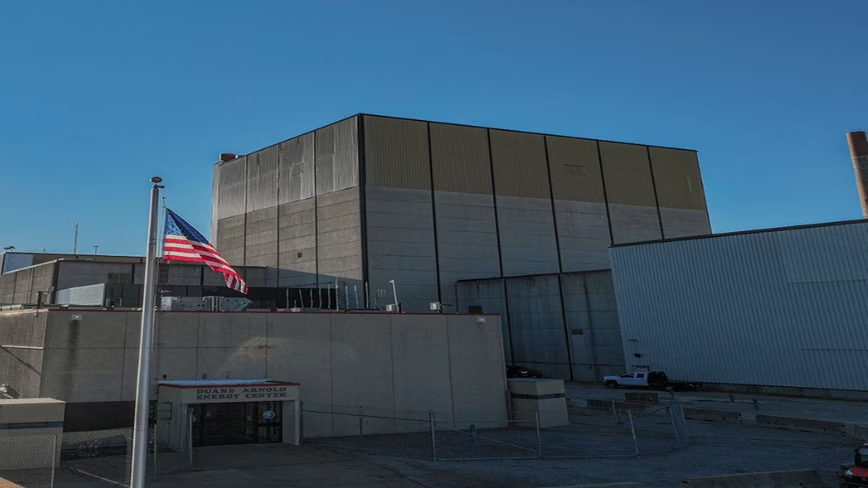

The Duane Arnold Energy Center near Palo, Iowa Credit: NextEra Energy The US Department of Energy has lent NextEra Energy up to $1.9bn to restart the Duane Arnold Energy Center. It is Iowa’s only nuclear power plant. Most of its power is already sold to Google, under a 25-year deal to supply the company’s cloud and AI infrastructure in the state. The department’s Office of Energy Dominance Financing announced the financial close on 8 September.
The restart still needs approval from the Nuclear Regulatory Commission (NRC). NextEra expects the plant back online around the end of 2028 or early 2029. Duane Arnold first opened in 1975 and had a licence to run until 2034, the Washington Examiner reported. It stopped operating in 2020, after a storm damaged the site.
It will return with 615 megawatts of capacity, 14 megawatts more than before, TechCrunch’s Tim De Chant reported. The department says that is enough to power nearly 500,000 homes. What the government says it buys The department expects nearly 1,500 jobs during construction. It says more than 450 will remain once the plant is running.
It framed the loan as part of President Trump’s push to expand nuclear power. James Danly, the deputy secretary of energy, made the case on cost. “Returning 615 megawatts of reliable baseload generation will drive down electricity costs,” he said. Gregory Beard, who runs the financing office, called Duane Arnold “exactly the kind of investment” the administration wants. The loan is part of a wider programme.
The department says its financing office has now funded three nuclear plant restarts under the current administration. The others are Palisades in Michigan and the Crane Clean Energy Center, formerly Three Mile Island, according to the Washington Examiner. The Palisades loan was agreed under the Biden administration. Crane received a $1bn loan last November.
Crane is the bigger project. Constellation Energy is restarting it with 835 megawatts at a cost of about $1.6bn, Utility Dive reported. In June, the administration also said it would issue $17.5bn in loans for 10 new large reactors, the Washington Examiner reported. Who gets the power The plant’s revival started with Google.
In October 2025, NextEra and Google announced a 25-year agreement for Google to buy the plant’s output. The Central Iowa Power Cooperative, a minority owner, agreed to buy the rest on the same terms. NextEra is buying out the two cooperatives’ combined 30% stake, which will give it full ownership. The companies said Google’s agreement enables the investment to restart the plant and covers the cost of producing its power.
They added that Iowa customers would not bear any costs for the power Google buys. The cooperative’s share is small. NextEra’s John Ketchum said on an earnings call last year that just 50 megawatts would go to it, according to TechCrunch. Google is looking at building up to six data centres near the plant, Data Center Dynamics has reported.
The cost question Danly did not explain how the restart would bring down electricity costs, TechCrunch noted. The department also declined to answer a question about household bills, Utility Dive reported. It asked how the loan fits with a pledge to protect residential customers from data centre infrastructure costs. The question matters because of a growing fight over who pays for AI’s power.
Tech companies have been on a charm offensive to win over the towns where they want to build. NextEra, meanwhile, has agreed a $67bn deal for Dominion and plans a data campus in Kentucky with Brookfield. What the regulator still has to do The NRC has to approve three licensing changes before the plant can run. They restore its operating conditions and technical specifications, its emergency preparedness plan and its security plan.
At a public meeting in April, the regulator said it would issue them all before January 2028. The American Nuclear Society reported the timeline. In August, the NRC published a draft environmental assessment with a draft finding of no significant impact. The final assessment and finding come next.
How many restarts are left Shuttered reactors appeal to tech companies for a simple reason. They can deliver large amounts of clean, always-on power faster than new plants. The pipeline is short, though. An earlier Utility Dive analysis found only one or two more US candidates after these three.
Those plants have been closed for longer and would need more work. That pushes the industry towards new reactors, which take far longer. Amazon-backed X-energy has already gone public to fund small modular designs. In Europe, Google is building its €13bn Finnish expansion in a country with its own nuclear and wind supply.
For Duane Arnold, the next dates are regulatory. The final environmental assessment comes first, then the NRC’s licensing decisions, due before January 2028. Only then can a plant that last ran in 2020 start sending power to Google. Also tagged with


