

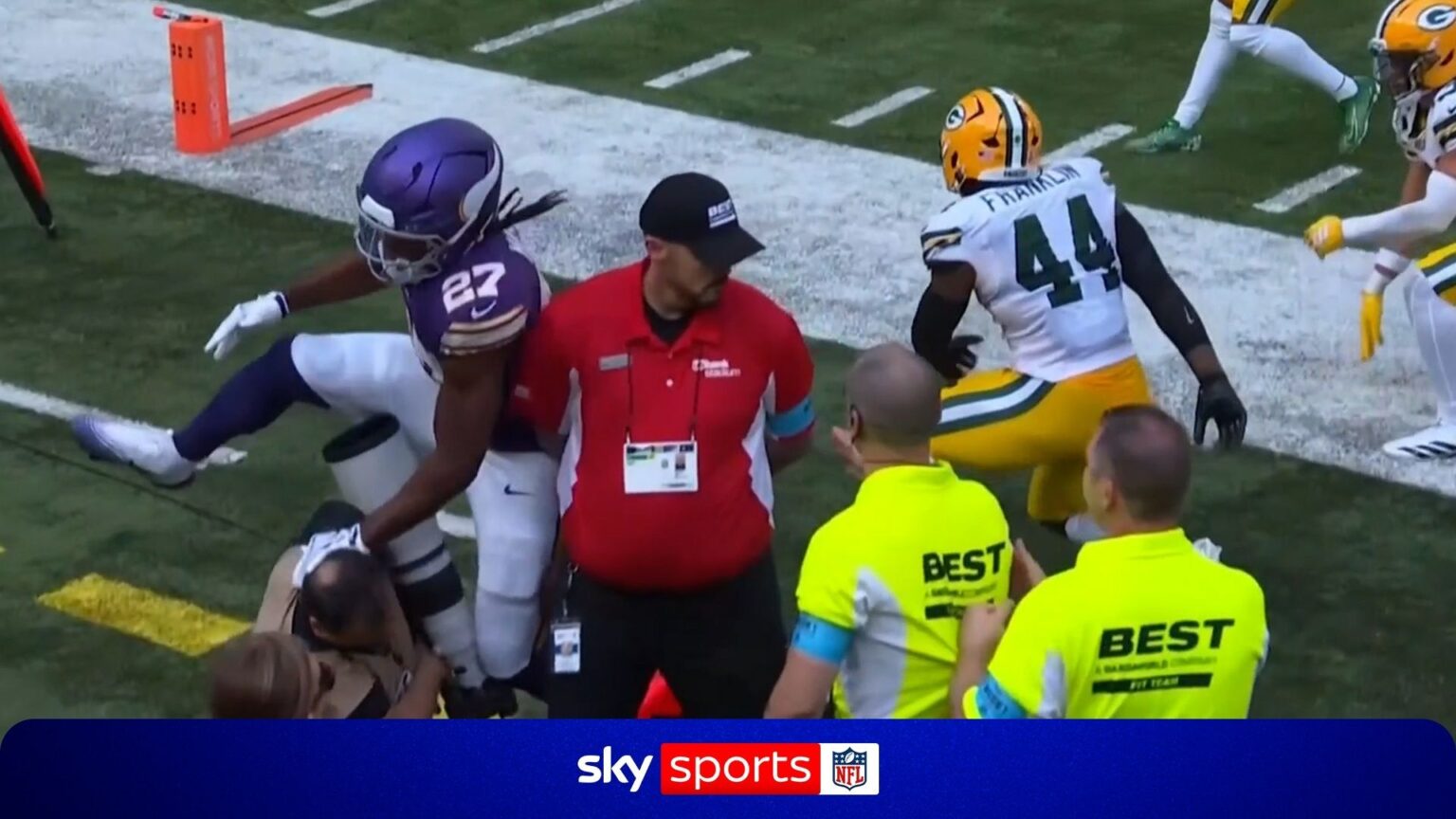

The intense NFC North rivalry between the Green Bay Packers and Minnesota Vikings delivered unexpected drama early in the first quarter when an unlucky broadcast cameraman was violently leveled on the sideline. As a high-velocity play spilled over the boundary, momentum carried athletes past the field of play before they could stop, plowing directly into the media worker. The bone-crushing collision sent heavy television equipment flying across the turf and immediately halted action as players and medical personnel rushed to assist. Game officials briefly paused the contest while trainers attended to the fallen crew member, highlighting the constant physical risks faced by sideline staff during professional football games.
Sideline collisions have long been a hazardous reality of National Football League broadcasts, where elite athletes weighing upwards of 250 pounds run at top speed toward tight boundaries. Camera operators carrying heavy, expensive gear often have limited mobility and compromised peripheral vision while focusing intensely through viewfinders on the action inside the lines. In this instance, the fast-paced nature of the opening quarter left virtually no time for the technician to dodge the oncoming trajectory of the players. Eyewitnesses near the bench described the sound of the impact as reverberating through the lower bowl of the stadium, drawing collective gasps from the crowd of rival fans.
Demonstrating immediate sportsmanship, athletes from both the Green Bay and Minnesota rosters quickly motioned for medical assistance as soon as the crash occurred. Training staff sped to the scene to evaluate the operator for potential concussions, fractures, or structural injuries caused by the combined force of the players and heavy broadcasting rig. The technician was eventually helped to his feet to a warm ovation from the stadium crowd before being escorted off the field for further evaluation in the venue’s medical facility. Broadcast networks briefly adjusted coverage away from the scene, standard procedure during unexpected medical interruptions, before resuming regular play once the boundary was cleared.
The incident reignites an ongoing debate regarding media access and safety protocols along the narrow sidelines of modern NFL venues. Over the past several seasons, high-profile collisions involving chain crews, sound engineers, and camera personnel have prompted calls for wider safety buffers between the field and broadcast crews. Despite existing guidelines requiring non-football personnel to remain behind designated restrictor lines, the terrifying speed of modern play routinely renders those boundaries insufficient when momentum carries action off the field. League officials routinely review film from such incidents to evaluate whether positioning rules or venue adjustments are necessary to better safeguard media workers.
Despite the dramatic disruption early in the contest, the pivotal division matchup between Green Bay and Minnesota resumed with its usual high-stakes intensity. Games between these two historic franchises are notoriously physical, making the charged atmosphere a high-voltage backdrop for intense plays both on and off the field. Broadcast crews behind the scenes adapted quickly, swapping in replacement equipment to ensure national television viewers did not miss a single snap of the ongoing NFC North battle. The scary crash served as a stark reminder of the underlying dangers inherent in capturing close-up coverage of professional football.


