

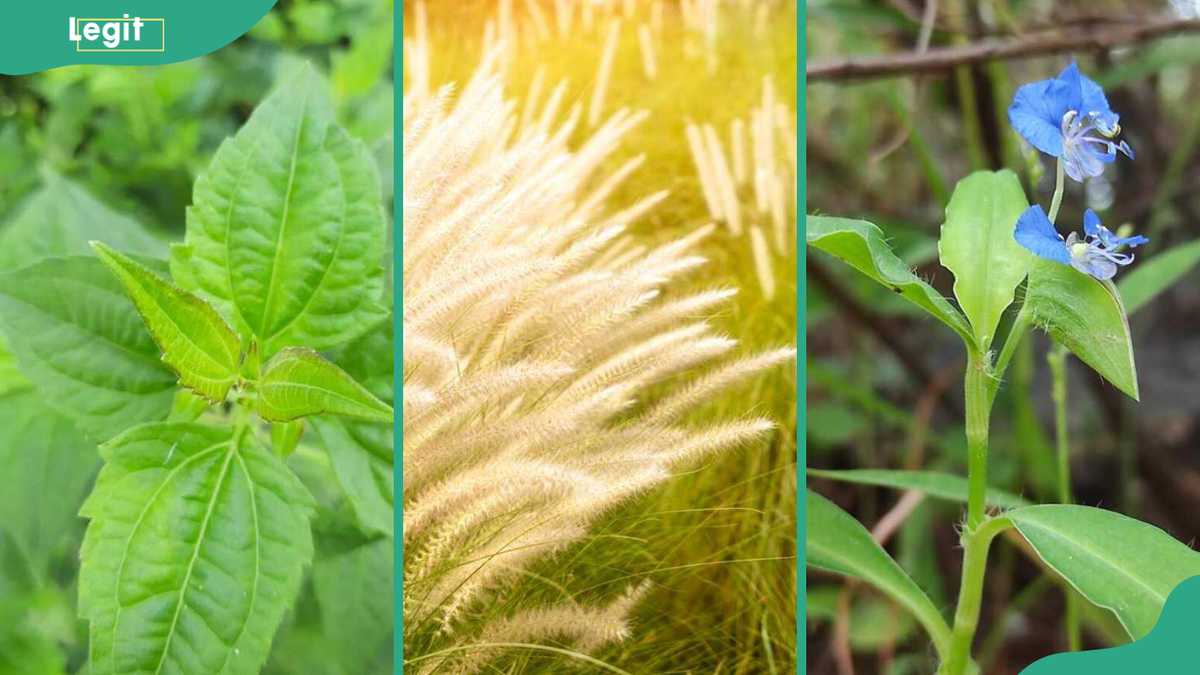

Speargrass (Imperata cylindrica), found on millions of hectares across Nigeria, is the most widespread weed threatening West African farmland. This guide lists 30 common weeds in Nigeria and their names, with botanical names, identifying features, and agricultural impact, so farmers, students, and gardeners can identify what is growing on their land.Chromolaena odorata, Spear grass, and dayflower plants. Photo: Getty Images (modified by author) Source: Getty ImagesTABLE OF CONTENTSKey takeawaysCommon weeds and their scientific names in Nigeria1. Speargrass (Imperata cylindrica)2.
Siam weed (Chromolaena odorata)3. Nutgrass (Cyperus rotundus)4. Milkweed (Euphorbia heterophylla)5. Nuke-Noh (Tridax procumbens)6.
Witchweed (Striga spp.)7. Couchgrass (Digitaria abyssinica)8. Dayflower (Commelina benghalensis)9. American bushmint (Hyptis spicigera)10.
Bahama grass (Cynodon dactylon)11. Wild sunflower (Aspilia africana)12. Elephant grass (Pennisetum purpureum)13. Carpet grass (Axonopus compressus)14.
African club moss (Selaginella kraussiana)15. African feather grass (Cenchrus macrourus)16. African olive (Olea europaea subsp. africana)17. Buffalo grass (Stenotaphrum secundatum)18.
Falsethistle (Acanthus montanus)19. Creeping foxglove (Asystasia gangetica)20. Yellow justicia (Justicia flava)21. Blackjack (Bidens pilosa)22.
Waterleaf (Talinum triangulare)23. Pigweed (Amaranthus spinosus)24. Thorn apple (Datura stramonium)25. Shame plant (Mimosa pudica)26.
Itchgrass (Rottboellia cochinchinensis)27. Wild lettuce (Lactuca taraxacifolia)28. Water hyacinth (Eichhornia crassipes)29. African spider plant (Cleome gynandra)30.
Guinea grass (Megathyrsus maximus)Frequently asked questionsWhat are the most common weeds in Nigeria?What is the botanical name for speargrass in Nigeria?Are any weeds in Nigeria edible?How do farmers control weeds in Nigeria?What is the most harmful weed in Nigeria?Key takeawaysNigeria is home to dozens of weed species that compete with crops for nutrients, water, and sunlight.Imperata cylindrica (speargrass) is considered the most economically damaging grass weed in West African agriculture.Weeds in Nigeria fall into four main groups: grass weeds, broadleaf weeds, sedges, and parasitic weeds.Several common Nigerian weeds, including waterleaf (Talinum triangulare) and wild lettuce (Lactuca taraxacifolia), are edible and widely used in traditional cooking and medicine.Correct identification is the first step to effective control; different weed types require different management methods.Common weeds and their scientific names in NigeriaIn Nigeria, common weeds range from fast-growing broadleaf shrubs and persistent grasses to parasitic species and floating aquatic plants. Check out the most common Nigerian weeds and their botanical names below.This list was compiled based on agricultural distribution, prevalence across Nigerian farming zones, and frequency in agronomic research, including A Handbook of West African Weeds by C. W. Agyakwa and I.
O. Akobundu.Common nameBotanical nameTypeSpeargrassImperata cylindricaPerennial grassSiam weedChromolaena odorataInvasive shrubNutgrassCyperus rotundusSedgeMilkweedEuphorbia heterophyllaBroadleaf annualNuke-NohTridax procumbensBroadleafWitchweedStriga spp.Parasitic broadleafCouchgrassDigitaria abyssinicaPerennial grassDayflowerCommelina benghalensisAnnual broadleafAmerican bushmintHyptis spicigeraAnnual broadleafBahama grassCynodon dactylonPerennial grassWild sunflowerAspilia africanaBroadleafElephant grassPennisetum purpureumPerennial grassCarpet grassAxonopus compressusPerennial grassAfrican club mossSelaginella kraussianaLycophyteAfrican feather grassCenchrus macrourusPerennial grassAfrican oliveOlea europaea subsp. africanaWoody shrubBuffalo grassStenotaphrum secundatumPerennial grassFalsethistleAcanthus montanusPerennial broadleafCreeping foxgloveAsystasia gangeticaPerennial broadleafYellow justiciaJusticia flavaBroadleafBlackjackBidens pilosaAnnual broadleafWaterleafTalinum triangularePerennial broadleafPigweedAmaranthus spinosusAnnual broadleafThorn appleDatura stramoniumAnnual broadleafShame plantMimosa pudicaBroadleaf shrubItchgrassRottboellia cochinchinensisAnnual grassWild lettuceLactuca taraxacifoliaAnnual broadleafWater hyacinthEichhornia crassipesAquatic broadleafAfrican spider plantCleome gynandraAnnual broadleafGuinea grassMegathyrsus maximusPerennial grass1. Speargrass (Imperata cylindrica)A field with Spear grass. Photo: Getty Images Source: Getty ImagesBotanical name: Imperata cylindricaFamily: Poaceae (grass family)Type: Perennial grassAlso known as: Cogon grass, blady grass, lalangSpeargrass is a relatively tall grass reaching up to 2 metres with long, thin stems and fluffy, cotton-like flower heads.
It spreads aggressively via underground rhizomes, making it extremely difficult to eradicate once established.It is used for decoration, roof thatching, and medicine in some parts of West Africa. However, it is mostly considered useless and troublesome, as it hampers agricultural production in Nigeria, where it competes directly with maize, cassava, and other staple crops.2. Siam weed (Chromolaena odorata)Botanical name: Chromolaena odorataFamily: AsteraceaeType: Invasive perennial shrubAlso known as: Devil weed, Siam bushSiam weed is an invasive shrub introduced from Central America that now dominates fallow land across southern Nigeria. It is also called devil weed and has some unexpected benefits.Of course, it is a mostly useless plant that grows on the land that lies fallow, but it can keep other weeds away that are much harder to get rid of.
Farmers sometimes tolerate it on fallow land because it suppresses more difficult weeds like nutgrass.3. Nutgrass (Cyperus rotundus)A close-up picture of Cyperus rotundus. Photo: Getty Images Source: Getty ImagesBotanical name: Cyperus rotundusFamily: Cyperaceae (sedge family)Type: Perennial sedgeAlso known as: Purple nutsedge, earth almondDespite its name, nutgrass is not a true grass but a sedge, identified by its triangular stems and nut-like underground tubers. It is widely recognised as one of the world’s most troublesome agricultural weeds.The plant prefers dry conditions, but it can survive in moist soil, which makes it hard to get rid of, so Nigerian farmers hate it.
Its tubers can remain dormant underground and sprout new plants when disturbed.4. Milkweed (Euphorbia heterophylla)A close-up picture of Euphorbia heterophylla. Photo: Getty Images Source: Getty ImagesBotanical name: Euphorbia heterophyllaFamily: EuphorbiaceaeType: Annual broadleafAlso known as: Wild poinsettia, painted leafMilkweed is named for the milky white substance it exudes when cut. It has poinsettia-like false flowers without petals and is a significant weed in soybean and cassava fields across West Africa.Important warning: It might cause anaphylaxis and dermatitis in people who are sensitive to latex.
Always wear gloves when handling this plant.5. Nuke-Noh (Tridax procumbens)Botanical name: Tridax procumbensFamily: AsteraceaeType: Annual/perennial broadleafAlso known as: Tridax daisy, coatbuttonsThough farmers view it as a pest, this plant has traditional medicinal uses. It is said to be helpful for people who are dealing with diabetes. It is also called tridax daisy and produces small cream-coloured flowers on long stalks.The weed is invasive and difficult to eliminate because it re-sprouts readily and produces large numbers of wind-dispersed seeds.
It is common in disturbed soils, roadsides, gardens, and cultivated fields across Nigeria.6. Witchweed (Striga spp.)Botanical name: Striga hermonthica, S. asiatica, S. gesnerioidesFamily: OrobanchaceaeType: Obligate parasitic broadleafAlso known as: StrigaWitchweed is described as particularly unpleasant. It robs other plants of their nutrients by penetrating their root systems. Cereal grains suffer from this weed the most.
In Nigeria, it causes severe losses in maize, sorghum, millet, and cowpea.The weed’s